
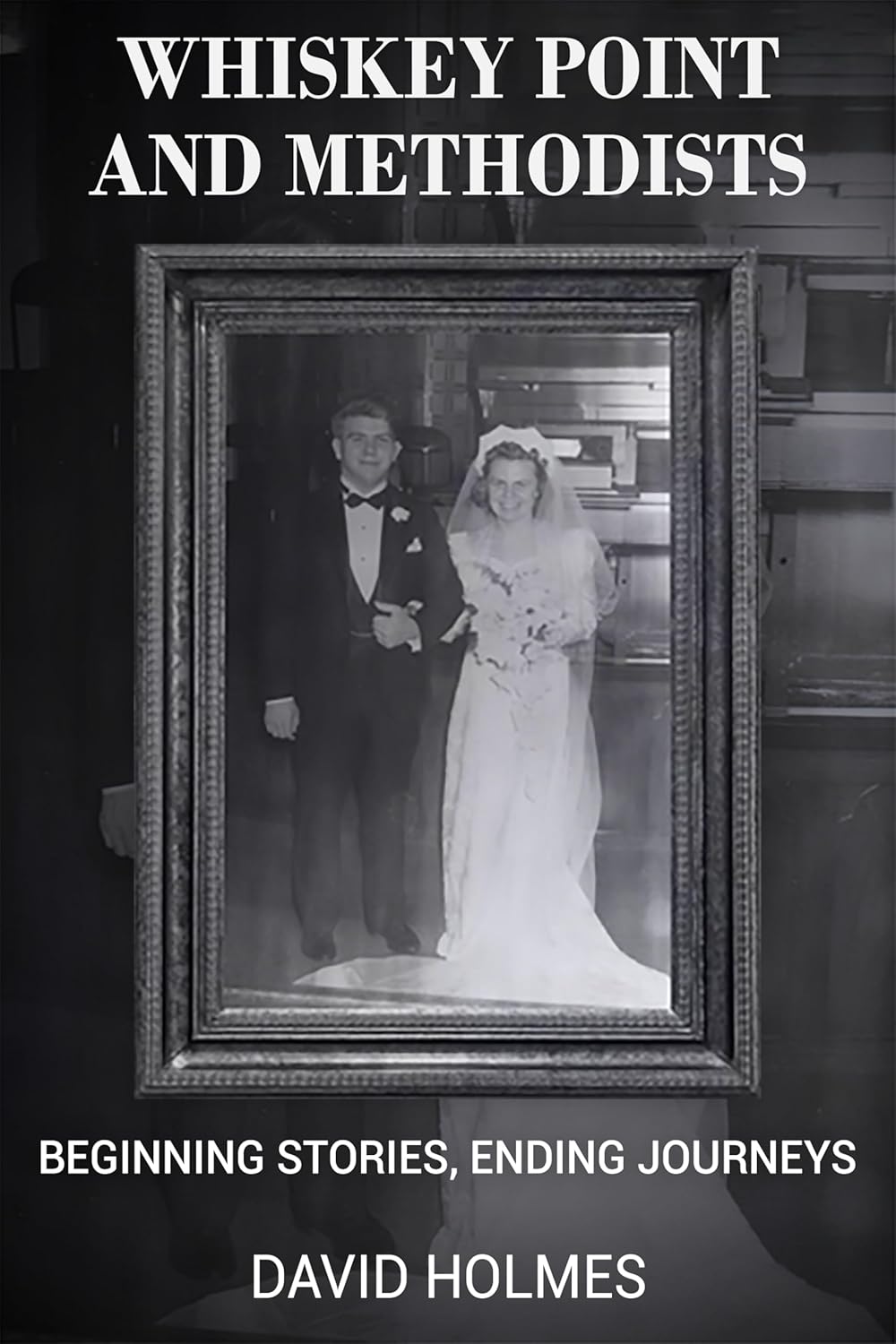
In Whiskey Point and Methodists, David Holmes performs a tricky, sometimes intimidating task: chronicling family history not as accurately rendered, but as it is too often recalled—blurred, rich, and worn through the mist of feeling. His memoir feels as if someone is looking into a tarnished mirror, one that has been clouded through the years and use. The picture it presents is not always clear, but it is true, and in being true, it is hence immensely powerful.
Holmes admits to this fog from the beginning. In his author’s note, he confesses that the memories he attempts to remember are not untainted; they are “seen dimly, as through a cracked and fogged dime-store mirror.” This is a metaphor that pervades the whole book. Rather than insisting on clarity where there is none, Holmes accepts the imperfections. The cracks in memory, he implies, are where the truth resides.
Family legends, particularly when passed down through generations, are not usually neat. They are wrapped in prejudice, smoothed out by love, or embittered by unfinished hurt. Holmes does not attempt to tidy up these facts. Instead, he is respectful of the complexity of his parents’ lives, the rough edges of his father’s youth along the Union Stockyards and Whiskey Point, the domestic strictness of his mother’s Methodist home in Oak Park. These are not mere characters in a memoir. They are individuals with contradiction, with pride and pain, with grit and grace.
Writing in the fog also involves coming to terms with what cannot be done or is not known. Holmes regularly resorts to letters, report cards, old photographs, and artifacts to piece together timelines and personalities. But things can only tell half the story. The other half has to be imagined, tentatively, respectfully. He navigates this tightrope with elegance, never pretending to know anything more than he does, but asking the reader to join him in remembering.
What emerges is not a straight family history but a mosaic, a narrative constructed out of shards and glimpses. A wristwatch pulled out of a lake. A candle-lit Christmas tree when the children are asleep. A father’s blades skating silently over frozen ponds. These memories, short and intensely sensory, provide the book with its emotional heft. Holmes does not instruct us as to what to feel. He demonstrates how it felt.
This is the gift of writing family through a steamed mirror: it defies the neat conclusions of nostalgia or blame. It presents instead a truer, more human version of legacy, one that welcomes silence, distance, tenderness, and uncertainty in equal measure.
Holmes’s journey is more than an excavation of the past. It is an act of sewing memory into meaning, of locating oneself in a line of complicated people who did the best they could with what they had. The mirror might be fogged, but in its reflection we still see something real: enduring love, stories that count, and the shadow of voices that formed us, even if we can no longer clearly hear them.
This way, Whiskey Point and Methodists transcend memoir; it becomes a meditation on how we embrace our history, however clumsily, and how that history, in turn, embraces us.